Case

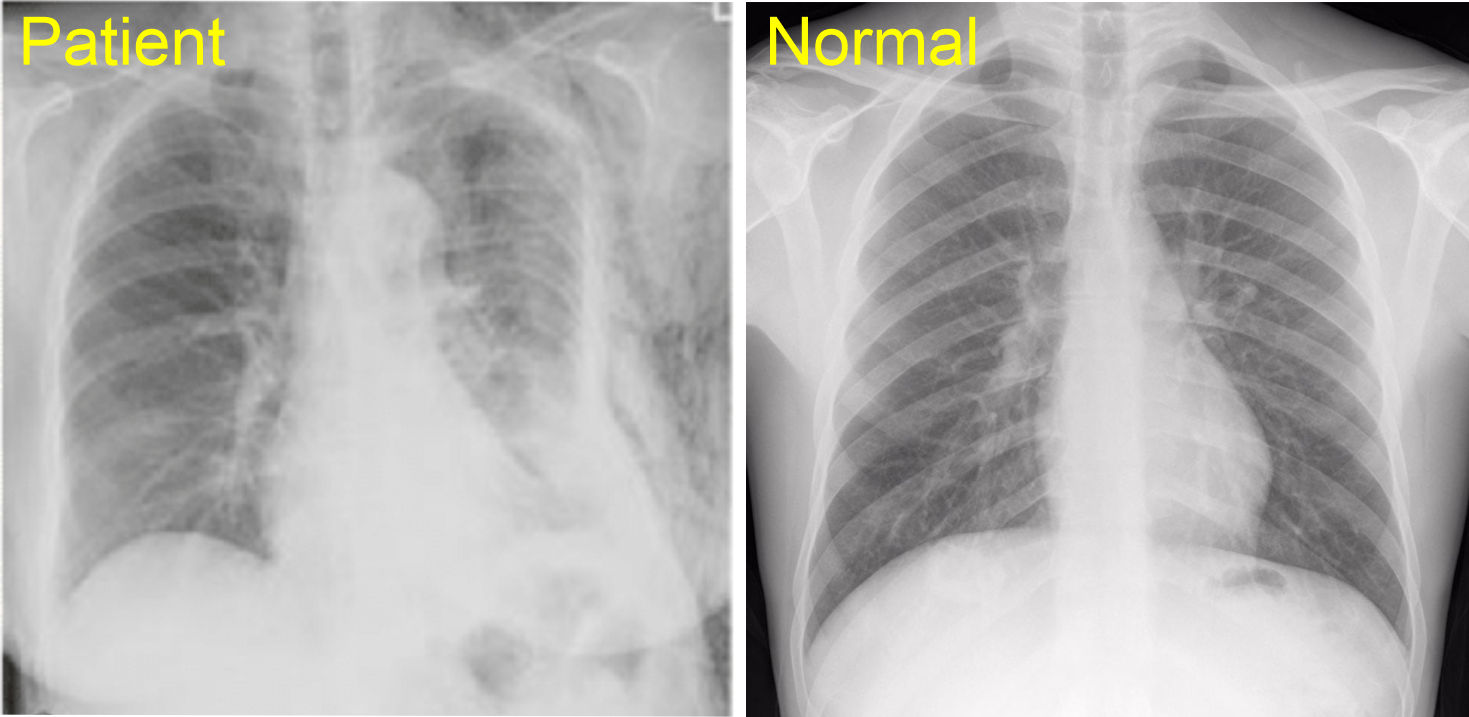
A patient was in a side car impact where the drivers side door collapsed inward impacting the anterolateral aspect of the patients left torso. The patient indicates they have extreme pain when moving their left arm and shortness of breath. The pain is significantly stronger than during quiet breathing. When moving the arm back and forth you hear a 'clicking' - Click here for sound  - A chest film is ordered and shows

Question 1/3 - What are you concerned about?

Click on your selected option(s) below  (correct = 2, possible 5, over-thinking = 6+)

Incorrect.  Muscular strain is usually from an over-extension, over-use, or unusual stretch trajectory. A high energy impact to the torso is unlikely to strain the pectoralis major muscle in isolation.

Incorrect.  Muscular strain is usually from an over-extension, over-use, or unusual stretch trajectory. A high energy impact to the torso is unlikely to strain the pectoralis minor muscle in isolation. 

Correct!  Flail chest is a condition in which a set of ribs are broken at several points resulting in a segment of the rib cage becoming detached from the rest of the thoracic cage. A 3D reformat of a follow-up CT scan shows multiple breaks. One line of fracture is at the more posteriorly located angle of the rib (weakest point of the rib) and a second line of breaks anteriorly. The high energy impact likely pushed in on the lateral side of the ribcage, causing the posteriorly located angle of the ribs to break and the anterior points to break. The pain with arm movement is due to the detached rib regions being one end of the attachments for pectoralis major (ribs to clavicle), pectoralis minor (ribs to scapula), and serratus anterior muscles (ribs to scapula).


Possible, but of lower concern. The lateral impact could have dislocated the patients left arm as part of the mechanism of injury from the high energy lateral impact during the motor vehicle collision.

Incorrect. The X-Ray image shows a collapse along a wide aspect of the thoracic wall inconsistent with an isolated 3rd rib fracture.

Possible, but of lower concern. The lateral impact could have caused blunt force injury to the musculature of the thoracic wall and upper limb as part of the mechanism of injury from the high energy lateral impact during the motor vehicle collision.

Correct! The lateral impact and any penetration of the pleural space or lung could cause air leakage and a collapse of the lung (pneumothorax). Quick treatment is necessary to avoid life threatening complications that can arise.

Possible. The lateral impact could have damaged intercostal vasculature and cause bleeding subcutaneously or potentially into the pleural space (a hemothorax). There is some opacification on the left side of the X-Ray image which could suggest minor bleeding but no indications of significant hemorrhage at this stage, as you will learn in radiology.