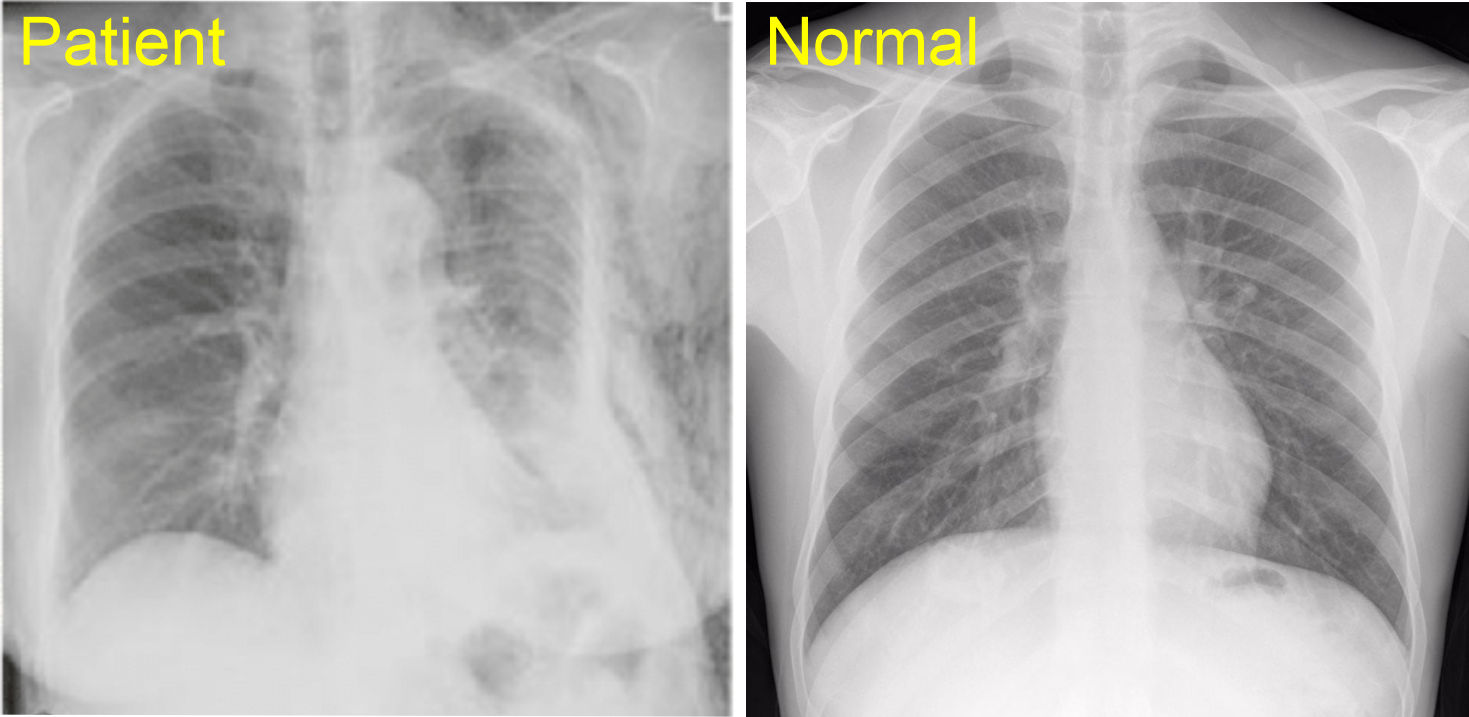
Case

A patient was in a side car impact where the drivers side door collapsed inward impacting the anterolateral aspect of the patients left torso. The patient indicates they have extreme pain when moving their left arm and shortness of breath. The pain is significantly stronger than during quiet breathing. When moving the arm back and forth you hear a 'clicking' - Click here for sound  - A CT is also ordered and shows

Question 3/3 - What is your plan for this patient?

Click on your selected option(s) below  (correct = 1, over-thinking = 2+)

Incorrect. There is no effective way to plaster cast the thorax, since the ribcage must be able to move with respiration. Anything that prevented chest movement would interfere significantly with breathing.

Possible, but of little value. MRI is not particularly good at viewing bony structures, thus the previously performed X-Ray and CT scans will have provided all the information necessary to formulate a plan of action.

Incorrect. A sling approach is primarily used for clavicular fractures. Stabilizing the arm position does not address the broken ribs adequately.

Correct! Flail chest is a potentially life threatening condition. The detached panel of the thoracic cage is unstable and will move paradoxically with breathing (on inhalation the detached ribs move inwards). Due to the constant movement and multiple broken ends, there is a significant risk of fractured rib ends causing lung damage unless they are stabilized. This is repaired by a rib fixation surgery (colloquially 'rib plating') where titanium plates are implanted to hold the ribs in their correct anatomic location while they heal.

Incorrect. Flail chest is potentially life threatening and sending someone home would delay urgent care if they experience difficulties breathing.